
Maywood Previous Residents: Source Eras
One address can have an ownership trail and a household trail. The first follows recorded transfers. The second follows listed names, census households, permits, public notices, and family records. The table sets the usable span beside its keeper and contribution. It also shows why no single source can be called a complete list of previous residents.
| Source | Years it covers | Where held | What it shows |
|---|---|---|---|
| Recorder deeds and liens | 1850-present county holdings | RR/CC Norwalk and branches | Legal ownership and recorded interests |
| LAPL city directories | 1873-1970 collection; broader LA runs vary | LAPL ResCarta and Central Library | Listed name, address, occupation, spouse clues |
| LAPL reverse directories | 1906, 1927, 1956-1987 | ResCarta and Central Library | Address to listed householder or business |
| Federal census | Through 1950 | NARA, FamilySearch, libraries | Household names, ages, relationships, residence |
| California voter registrations | 1900-1968 digitized set | Ancestry Library Edition | Name, address, and political-registration fields |
| Maywood permits | Permanent records; earliest surviving year not located | Building Division or CPRA | Improvement, applicant, contractor, inspection dates |
| Pre-sale inspections | Current program; inception not located | Maywood Building and Planning | Transfer-era condition and buyer/seller signatures |
The Recorder's general information confirms the long county span and the offline index rule.
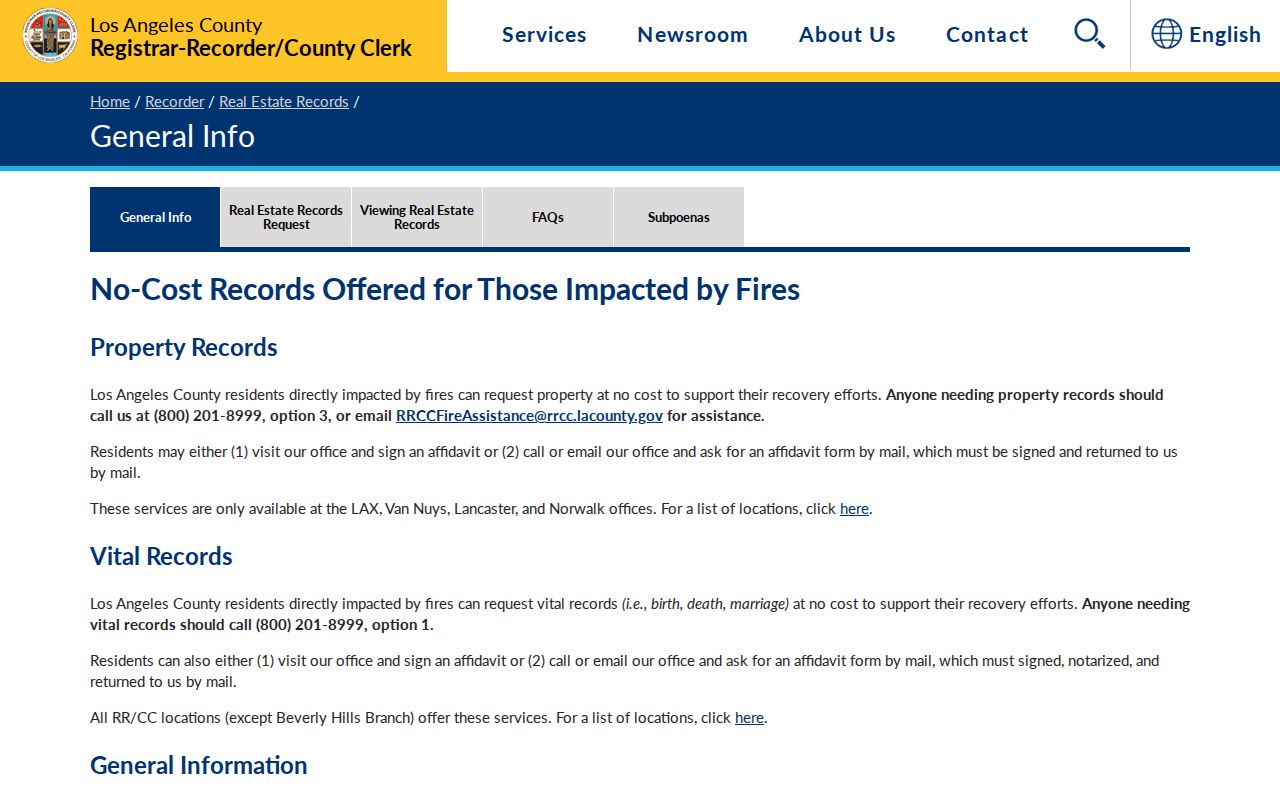
Start with the era that matches the question, then add a second source with a different record purpose.
Start a Maywood Resident Search
The Assessor Portal is the address-to-parcel key. Enter the current Maywood situs or 10-digit AIN. Copy the formatted APN, legal-description fragments, use and improvement facts, map link, assessed values, and recent-sale clue. The current roll may lag a transfer. A tax mailing address can belong to a trust, manager, or owner elsewhere, so it is a lead to test rather than a claim about who lived at the property.
Use the PAIS map to click nearby parcels when a lot split, rear parcel, alley, or street label makes the address hard to follow. Confirm each AIN in Basic Search. Then use the legal description and owner-associated information to form the name-and-year query for the Recorder. This is the cleanest route for previous residents because the Recorder cannot begin with a street address.
- Search today's address or AIN and save the parcel identity.
- Check recent-sale and tax clues without treating them as a complete title history.
- Identify the current grantee or other party clue through an assessment or public-record channel.
- Carry that name and a likely recording year to the RR/CC index.
A previous-residents trail becomes fragile when the house number is carried forward without checking the legal description.
Walk Maywood's Deed Chain for Residents
In Recorder language, the grantor is the seller or transferor and the grantee is the buyer or recipient. Find the current acquisition deed by searching the current grantee and likely recording year. Read the instrument for grantor, grantee, recording date, document number, vesting, APN, and legal description. Then search that grantor as an earlier grantee. Repeat backward, preserving every instrument reference.
- Begin with the current parcel and the best available grantee name.
- Search the RR/CC name-and-year index in person; staff cannot search it by address.
- View or order the whole instrument, then compare APN and legal description.
- Move from the named grantor to an earlier grantee and repeat year by year.
- Stop and branch when the chain enters a trust, entity, probate, lien, or reconveyance.
The Recorder offers in-person index and viewing, a contracted online copy request, mail, fax, and counter service. Orders can take up to 20 working days according to the research. A certified copy is a custodian-certified document, not the same as a free index reference. Whole-document purchase rules apply.
The RR/CC real-estate search guide explains the grantor, grantee, and recording-year keys.
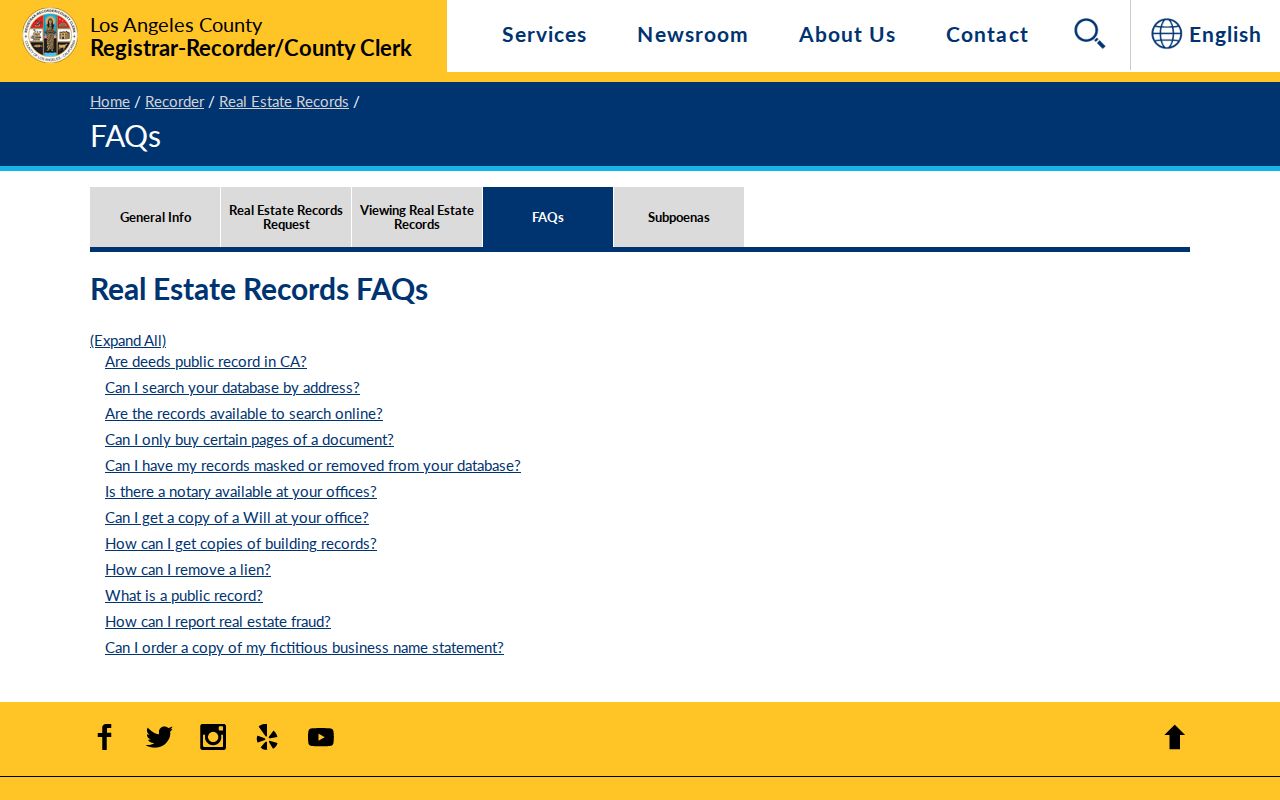
The party-name index is the backward trail's first real search step after the parcel is anchored.
- Chain of title
- The linked sequence of recorded transfers for one parcel.
- Grantor
- The party giving or transferring the recorded interest.
- Grantee
- The party receiving the recorded interest.
- Legal description
- The land identity used to test continuity when a street address changes.
Maywood's Offline Resident Index
Los Angeles County deeds are public from 1850, but the grantor, grantee, and year index is not a public web database. RR/CC cites Government Code section 6254.21 concerns about home addresses and the difficulty of identifying protected officials across millions of records. That privacy decision creates a practical divide. The web can explain the process or accept a specific copy request, while the index search and older viewing happen at county locations.
In-person Real Estate Records service is at 12400 Imperial Highway, Room 2207, Norwalk, Monday through Friday from 8-5 except holidays, with branch viewing and mail instructions also documented. Holdings split between 1851-1957 on the lower level and 1958-present on the second floor. The county describes more than 1,500 original handwritten index books in preservation material, some worn and carrying manuscript amendments.
A previous-residents search should budget time for spelling variants, the recording year rather than the sale year, and a possible book-and-page reference. No online index does not mean no record. It means the search channel is different.
The Recorder copy-request page shows remote routes for a known instrument or document request.
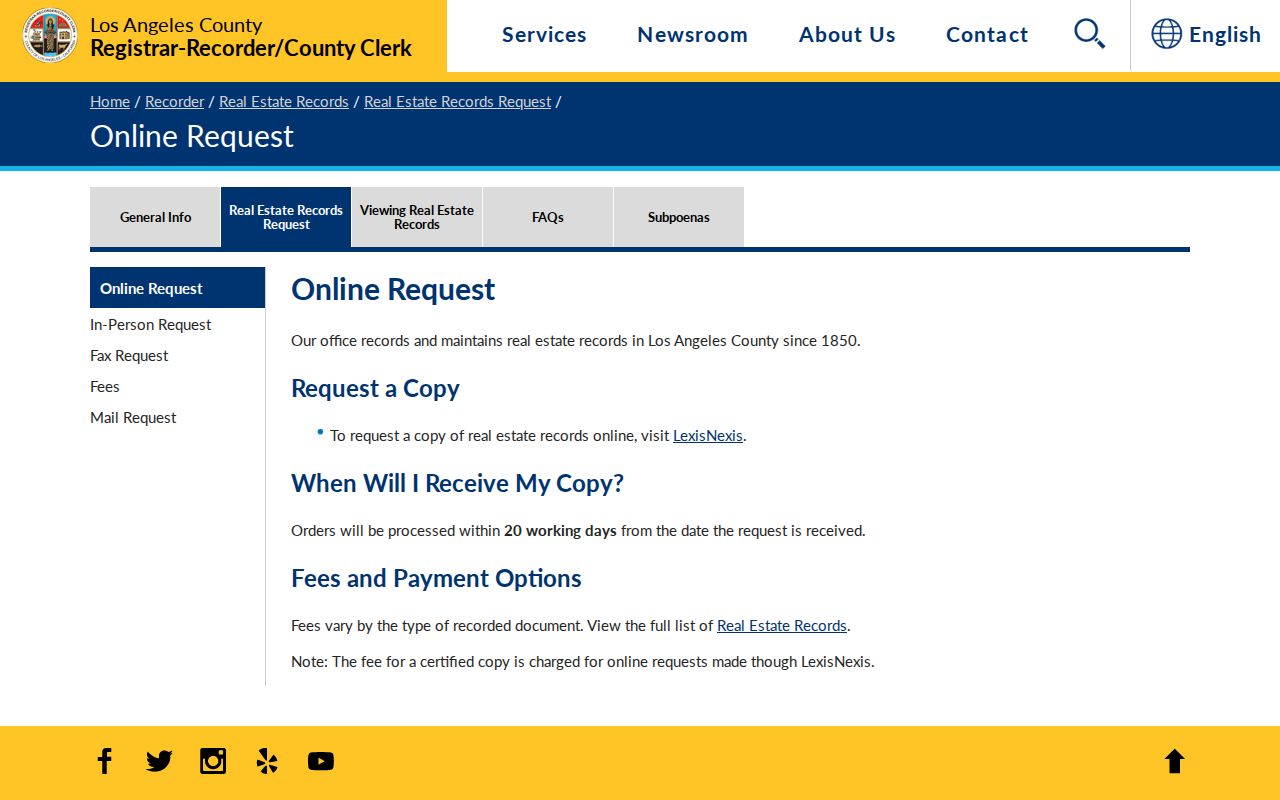
A remote request is useful after the index supplies enough detail to identify the document.
Order Maywood Deed Copies for Residents
Copy access is a separate stage from finding a prior owner. The research lists a certified copy as generally $6 for the first page and $3 for each additional page. The county says a whole document must be purchased, not selected pages. Verify the current fee notice before ordering because Recorder notices can change. The goal of a copy is to read the vesting, legal description, APN, parties, and linked instrument references.
Use the online vendor when the instrument number is known, or use mail, fax, in-person counter, and the county contact route. Keep the order date and request number with the document. A returned copy can carry a prior legal description or party spelling that is not obvious in a modern parcel card.
The Recorder fee page is the source to recheck pricing and counter details.
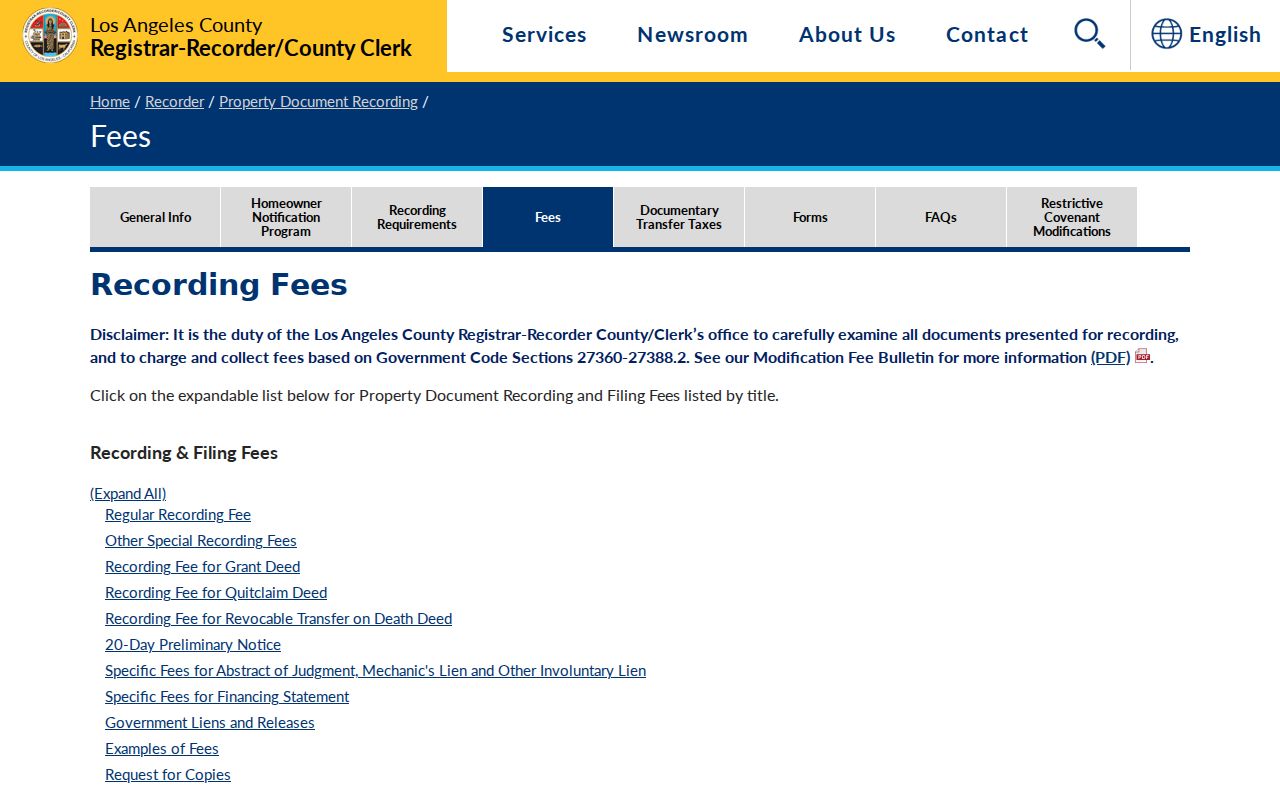
The fee page belongs in the research log because a fee is a current transaction fact, not a permanent historical rule.
Reverse Directories for Maywood Addresses
Ownership is only half of the previous-residents question. LAPL's city and reverse directories can add a listed householder or business at an address. The collections identify reverse runs in 1906, 1927, and 1956-1987, while the broader digitized city-and-street selection runs 1875-1987. Maywood coverage must be confirmed volume by volume. A missing page may reflect scope, OCR, a city label, or a skipped year.
Search the exact house number, then try a street abbreviation and a full street name. LAPL warns that numbered streets can appear as “Ave 64” or spelled out, and “Broadway” and “Bway” can differ. Record the printed name, address, volume, page, and publisher. A listed householder may have been an owner, occupant, or business contact. These previous residents clues are dated listings, not a current roll. It does not establish the full set of people at the address.
The Maywood city directory collections page handles the shelf and entry-reading details; this previous-residents trail uses those collections as dated address evidence.
Pair Maywood Directories and Census
Federal census schedules through 1950 provide a household snapshot under the 72-year rule. For Maywood, 1930, 1940, and 1950 are the key public post-incorporation schedules because incorporation occurred in 1924. Census entries can give names, ages, relationships, and residence. Directory entries can supply an address or listed name between census years. Pair the two without expecting identical household counts.
Use NARA, FamilySearch, or a library database for census access. A library can also provide Ancestry Library Edition for historical California voter registrations from 1900-1968. Voter files have legal purpose limits. A directory may identify a past householder while the census counts family members, boarders, or other people present. Differences are a prompt for more research, not evidence of an error by itself.
Pairing tip. Compare the closest directory year before and after a census, then note changes in address, spouse mark, age, and neighborhood order.
Maywood Permits and Past Residents
Maywood permits add a building-history layer to previous residents. The online counter can show permit application entry, inspection results, project status, and project-related financial data. The complete anonymous field set and historical online start date were not captured. Older permit ledgers and full files should be requested from Building or through the City Clerk. A permit is permanent evidence of improvements, but it is not a household roll.
The mandatory Maywood pre-sale inspection is unusually useful. The $110 application is valid for six months. Inspection usually takes two to three weeks. The inspector, with a planner when available, records violations or unpermitted work. Buyer and seller sign, the city retains the original, and a public copy can require a CPRA request with sensitive fields removed. This record can date a transfer-era condition beside a deed and help place previous residents around a documented sale.
The LAPL History of Your House workflow connects deeds, directories, probate, maps, permits, and newspapers.
The regional method keeps a past-household search grounded in the legal parcel and the source that created each clue.
Close Maywood Resident Trails
A former resident may disappear from a directory because of a move, death, a skipped volume, or a new spelling. Probate and obituary evidence can help test which explanation fits. Los Angeles Superior Court probate files, petitions, notices, and accountings may name heirs and addresses, while the Archives & Records Center holds relevant historical material. Restricted filings must be respected. A successor deed can then show a transfer after death.
LAPL newspapers include Los Angeles Times microfilm and historical archive runs. The Maywood library offers reference help, and Norwalk's Californiana Collection supplies county and state histories, directories, newspapers, and census material. These channels can be used in person when a web search ends. A death index or obituary is a relationship and date clue, not proof that the person remained at the Maywood address.
For an heir search, preserve the decedent name, case number, notice date, successor name, and deed instrument. Keep “named heir,” “past occupant,” and “later owner” as separate roles.
Geography Gaps for Maywood Past Residents
Maywood incorporated in 1924, but a prior resident did not become a new person in the records that day. Earlier entries may use Los Angeles County, township, community, or postal geography. A numbered street can have several forms. Spanish compound surnames, accents, spacing, hyphens, initials, and OCR variants can also hide continuity.
No authoritative Maywood-wide street-renumbering year was located, and no Maywood-specific Sanborn sheet set was verified. Use the current legal description, assessor map, directory street guide, historic map, and newspaper reference together. Sanborn maps can show footprint, material, use, and outbuildings where mapped. They do not name a residential owner.
Note: When an old Maywood address vanishes, compare geography and legal description before concluding that the previous residents left.
Limits on Maywood Past Resident Research
Previous residents research is for house history, genealogy, estate work, and personal curiosity. A deed chain describes title. A directory describes a publisher's listing. A census describes an enumeration. A permit describes a project. An obituary describes a death or relationship clue. None of these, alone or together, should be presented as a real-time list of every person connected to a home.
California privacy rules can hide voter addresses through Safe at Home, restrict voter-file purposes, limit vital copies, and protect DMV information. City files can redact personal fields. A public document can also contain an error. Use the custodian's correction route. Keep private working notes secure and do not republish protected information.
Lawful house history. A Maywood previous-residents search may help explain a property or reconnect a family. Do not use a past address or record to stalk, harass, intimidate, or harm a living person.
The backward trail is strongest when it names the source, year, page or instrument, role, and uncertainty. A “no result” is often a collection or access limit, not a blank past.